Showing posts with label faculty. Show all posts

Friday, October 30, 2015

CEHHS and Dearborn City Schools partner in English Language Arts project

DEARBORN, MI - CEHHS faculty member, Dr. Martha Adler was awarded a grant by the Michigan Department of Education (MDE) to lead the project Improving Teacher Quality: Academic Competence and Language Proficiency for ALL.

This project, in partnership with Dearborn City Schools, was designed to provide teachers with the knowledge and strategies to design and implement lessons that address language acquisition and reading comprehension.
MDE has identified Dearborn City Schools eligible for this grant due to its over 72% district-wide poverty rate and its 9,006 underrepresented English-language learner student population. The project will provide 90 hours of professional learning to 30 participating teachers (15 in grades K-5 and 15 in grades 7-12) through coursework that can be applied toward the MDE English as a Second Language endorsement.
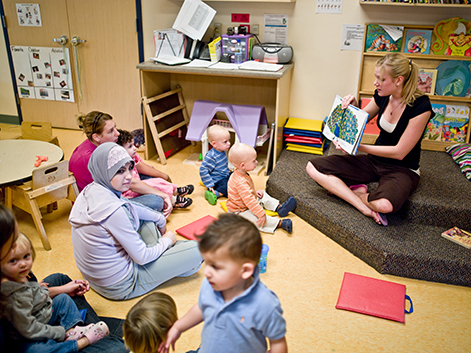
During the 2015-2016 year, the project will provide two 3-credit hour courses in a workshop format: The first course, Aligning Reading Theory and Best Practice to Curriculum and Instruction started in August 2015 and the second one, Second Language Teaching: K12 starts in January 2016. Both courses address student diversity, differing skill sets, background knowledge, and English language proficiencies.
The UM-Dearborn team includes three faculty members: Dr. Martha Adler, expert in Language Arts and ESL; Dr. Jaime S. Lee, expert in Second Language Acquisition and Dr. Laura Reynolds, expert in Assessment and Evaluation.
This project is another example of UM-Dearborn College of Education, Health and Human Services' commitment to support stronger outreach programs in local communities.

For more information about this project, please contact Dr. Martha Adler

Monday, June 15, 2015

CEHHS Science-Ed Research from Detroit Community Reaches National Conferences


CEHHS faculty member Dr. Chris Burke's partnership with Ms. Lazarowicz, an elementary science teacher at Neinas Elementary School, started in Fall 2012. Dr. Burke met Ms. Lazarowicz while she was presenting about her use of the outdoor classroom and school garden at the South East Michigan Stewardship (SEMIS) Community Forum. Following this visit Dr. Burke arranged for his EXPS 220 class to come to the school and work with her students to do experiments in the outdoor classroom.  

Neinas Elementary School is a community-centered school located in South West Detroit. The student body reflects the local community and is 78% Hispanic 10% White and 10% African American. The school has multiple strong community partnerships including E & L SuperMercado (the local supermarket) & Greening of Detroit. These partnerships helped support the development of the school’s outdoor classroom. Since this initial visit in Fall 2012, eight of Burke's EXPS classes (five sections of EXPS 220 and three sections of EDD 485) have collaborated with Ms. Lazarowicz’s students. Burke's students have studied native Michigan plants, and rain gardens culminating in the installation of a rain garden at Neinas in the outdoor classroom. They have also studied irrigation systems and structures culminating in the building of roof top garden planters. This past year Dr. Burke's EXPS 220 / EDD 485 students started studying structures that will help inform the planning and building of an Earthship.  

Dr. Burke's work at Neinas has been a productive and valuable part of his teaching at the College of Education, Health, and Human Services by providing a place for UM- Dearborn students to engage in Academic Service Learning and collaborate with elementary students on long term school projects. It has also been a valuable part of Dr. Burke's scholarship in that this community-based research helps him examine the process of developing students' sense of science agency and connection to the process of scientific investigation with the community. Dr. Burke's partnership with Ms. Lazarowicz has resulted in presentations at the Great Lakes Stewardship Initiative Place-Based Education Conference, the National Association of Multicultural Education Annual Conference, The Ecojustice and Activism Conference and most recently the SEMIS Community Forum.  

 Dr. Chris Burke believes that this work is important as it provides CEHHS students with an opportunity to see and work with a highly effective teacher in Detroit who is actively working to cultivate community connections and implement place-based education. As Burke says, "This opportunity helps CEHHS students develop an understanding of the importance of cultivating relationships with K-12 students, their parents, and the community. It also provides them a chance to engage in community-based science where they learn how to balance the formal rigors of science with the complexity of authentic questions that emerge from students engaging with the community". 

Burke's three year collaboration with Neinas has also provided him with a space to conduct scholarship related to the facilitation of students’ science agency, developing and sustaining school community partnerships, and place-based education. For more information on Dr. Chris Burke and his research please visit his faculty profile page.


Monday, December 8, 2014

Weathering The Storms: CEHHS Prof Sampson Works To Address Climate Change In Detroit


How does a city grappling with how to thrive in the present day begin to think about what it will look like 50 years down the road?
That was a question the Detroiters Working for Environmental Justice (DWEJ) wanted answered when it assembled the Detroit Climate Action Collaborative (DCAC) in 2011, a largely volunteer initiative to bring government, industry, academia, and the community together to address the effects of climate change on the city.
“Understandably, a lot of people don’t have the time and the resources to be thinking about climate change, but, as a society, I don’t think we have a choice in the matter,” said Natalie Sampson, University of Michigan-Dearborn assistant professor of health and human services. “It’s exciting to see [DWEJ Policy Director] Kimberly Hill Knot and the environmental justice community pick up this topic and run with it.”
Sampson sits on the DCAC steering committee and chairs the public health work group. She hopes to get decision-makers to think about how public health and climate change are connected. With climate change, southeast Michigan will likely experience increased temperatures and more heavy precipitation events. This has implications for health—think of how heat waves can trigger respiratory issues or how flooded basements can expose people to waterborne diseases.
“The core mission of public health fits in with getting ready for these events,” she said. “If we have these extreme weather events, what does that mean for some of the city’s most vulnerable residents? If we’re behind on this issue, we’re going to further amplify disparities.”
DCAC has led focus groups and community outreach activities to make sure their work reflects the needs, resources, and knowledge of Detroiters and the DCAC’s partners. Across the city, many related community development and environmental initiatives have been underway for years.
To address climate change, Sampson said, “We have to think about how we can put systems in place to support citywide efforts, as well as the good work that is already happening in Detroit’s neighborhoods.”
The DCAC is working on a climate action plan that will begin to address those needs in ways that reflect existing research. The plan—similar to plans developed in more than 600 cities nationwide—will document the city’s current greenhouse gas emissions levels and detail strategies on how to mitigate and adapt to climate change.
DCAC published initial accomplishments in the Michigan Journal of Sustainability and will release the climate action plan this spring. The group also plans to continue to work with its many partners and Detroit residents to raise awareness of climate change and its impact on the city.

Monday, October 20, 2014

How Does Climate Change Affect Public Health? Check Out CEHHS Professor Natalie Sampson's Work In Detroit To Find Out

How does a city grappling with how to thrive in the present day begin to think about what it will look like 50 years down the road?

That was a question the Detroiters Working for Environmental Justice (DWEJ) wanted answered when it assembled the Detroit Climate Action Collaborative (DCAC) in 2011, a largely volunteer initiative to bring government, industry, academia, and the community together to address the effects of climate change on the city.
Natalie Sampson
“Understandably, a lot of people don’t have the time and the resources to be thinking about climate change, but, as a society, I don’t think we have a choice in the matter,” said Natalie Sampson, University of Michigan-Dearborn assistant professor of health and human services. “It’s exciting to see [DWEJ Policy Director] Kimberly Hill Knot and the environmental justice community pick up this topic and run with it.”
Sampson sits on the DCAC steering committee and chairs the public health work group. She hopes to get decision-makers to think about how public health and climate change are connected. With climate change, southeast Michigan will likely experience increased temperatures and more heavy precipitation events. This has implications for health—think of how heat waves can trigger respiratory issues or how flooded basements can expose people to waterborne diseases.
“The core mission of public health fits in with getting ready for these events,” she said. “If we have these extreme weather events, what does that mean for some of the city’s most vulnerable residents? If we’re behind on this issue, we’re going to further amplify disparities.”
DCAC has led focus groups and community outreach activities to make sure their work reflects the needs, resources, and knowledge of Detroiters and the DCAC’s partners. Across the city, many related community development and environmental initiatives have been underway for years.
To address climate change, Sampson said, “We have to think about how we can put systems in place to support citywide efforts, as well as the good work that is already happening in Detroit’s neighborhoods.”
The DCAC is working on a climate action plan that will begin to address those needs in ways that reflect existing research. The plan—similar to plans developed in more than 600 cities nationwide—will document the city’s current greenhouse gas emissions levels and detail strategies on how to mitigate and adapt to climate change.
DCAC published initial accomplishments in the Michigan Journal of Sustainability and will release the climate action plan this spring. The group also plans to continue to work with its many partners and Detroit residents to raise awareness of climate change and its impact on the city.

Friday, October 10, 2014

CEHHS Faculty Member Chris Burke Partners with Detroit Elementary School for Lesson in Sustainability

October, 6th, 2014


View full article from The Record HERE

There’s no trace of the vacant building that once stood on the lot. And fumes from idling delivery trucks no longer breeze into classroom windows.
When Neinas Elementary School students purchased a vacant lot for $900, empty buildings and idling trucks gave way to rain gardens and flower beds as part of the school’s living outdoor classroom.
That classroom, it turns out, is the perfect setting for students enrolled in University of Michigan-Dearborn’s teacher education program to learn alongside elementary students.
“The space students live in is an important source for curricular information. It’s a way to ground the information you’re trying to teach them with issues that make the content authentic and connect it to their lives,” said Chris Burke, associate professor of science education, who uses the outdoor classroom to teach Introduction to Science for Elementary Teachers and Elementary Science Methods.
At Neinas Elementary School, that means learning about sustainability. Specifically, what does a sustainable southwest Detroit look like? Fifth-grade teacher Amy Lazarowicz has tackled the subject for years and connected with Burke nearly three years ago to bring UM-Dearborn students on board.
Together, the two groups of students have studied soil components and flower parts. They’ve hit crushed limestone paver when digging for rain gardens. And they’ve learned to decipher between different types of manure to determine the best way to make fertilizer.
UM-Dearborn College of Education, Health, and Human Services (CEHHS) students learn about classroom management and how to conduct experiments. But Burke hopes the lessons extend beyond basic textbook knowledge.
Through the course of the semester, he sees the role of student and educator shift a bit. This isn’t about saving Detroit, he said. It’s about learning from some of the city’s youngest residents.
“I want my students to learn from these kids. They have insights about the ecosystems of Detroit and pollution and the needs of the community that my students don’t have,” he said. “I want them to develop a deeper understanding and a more nuanced picture.”
That was the case for Zeinab Skaf.
The science education student came to Neinas to gain hands-on experience in the classroom. But she left with a better understanding of what students can teach her.
“The students at Neinas are smart, talented and motivated to learn,” Skaf said. “This experience taught me more about the city of Detroit and, more importantly, about the schools and students there.”

Friday, August 15, 2014

New Life for Old Textbooks: CEHHS prof ships resources to colleagues overseas to increase access to academic materials

Muna Al-Siyabi will return to her home country this summer as the first Omani instructor at Sultan Qaboos University with a master’s degree in early childhood education and a focus on special education.
It’s a distinction that brings certain benefits. For starters, she’ll become a leading advocate for children with special needs.
There is a downside, though.
“[Because] special education is a new major in Oman, we don’t have resources on the subject yet,” said Al-Siyabi, who earned her master’s degree this spring from University of Michigan-Dearborn. “None of the resources discuss new trends in teaching or educating young children with disabilities.”
She wanted to purchase additional materials to take back with her; but Kim Killu had a different idea. 
The UM-Dearborn professor of special education recently moved offices and purged a glut of teaching and learning resources in the process of relocating. That stockpile, along with materials from retiring professor Belinda Lazarus, now will travel back to Oman with Al-Siyabi.
Al-Siyabi plans to use the materials as an instructor at Sultan Qaboos.
“I am planning to advocate for children with special needs and these resources will be one way to increase my awareness about different issues related to special education,” she said. “Looking at different researches done in special education will give us guidelines about how we are going to teach individuals with disabilities.”
Sharing resources with colleagues abroad is nothing new for Killu. She often ships materials to friends and former classmates in Africa and South America who have limited access to academic materials.
“I think it’s important for us to share what we have here and pass it along to other people who don’t have access to what we have,” Killu said. “Textbooks are useful, older journals, assessment instruments, curriculum materials—they can use that in their courses.”
Killu says professors use these resources to provide more current information to their students, which helps in the classroom as well as in clinical experiences.
That’s how Al-Siyabi plans to use her new materials. They’ll serve as a starting point as Al-Siyabi and her students conduct their own research.
“I would like to work with my students to apply some research-based practices in teaching children with disabilities,” she said. “We will use the data we collect to help us make recommendation on how we can provide good services for young children.”

Friday, June 20, 2014

Dr. Laura Reynolds named Associate Dean

The College of Education, Health, and Human Services (CEHHS) announces that Dr. Laura K. Reynolds will be assuming the position of Associate Dean, effective 1 July 2014 pending approval from the University of Michigan Board of Regents.

Dr. Laura K. Reynolds
Dr. Reynolds joined the University of Michigan-Dearborn in 2005 from the University of South Carolina where she earned a Ph.D. in Educational Psychology.  Laura’s research, presentations, and publications focus on pre-service teacher preparation, learning theory, assessment and measurement, most recently focusing on higher education.  Laura has taught undergraduate courses including Educational Psychology, Introduction to Education and Adolescent Psychology as well as graduate courses including Quantitative Methodology, Research Methods and Classroom Assessment.  At UM-Dearborn, Laura has served on numerous campus-wide committees including the Vision 2020 Strategic Planning Committee and the Student Success Alliance and has functioned as an ex-officio member of the University Curriculum and Degree Committee (UCDC) and the Graduate and General Education sub-committees. She currently chairs the UCDC Assessment Sub-Committee.  For CEHHS, she has worked as a member of the former School of Education's Executive and Doctoral Program committees, and as the chair of the Tenure and Promotion Committee.  Most recently, Dr. Reynolds has coordinated our Higher Learning Commission re-accreditation self-study preparation and visit, and has served as the campus' Chief Assessment Officer.  

This is an exciting time for CEHHS, as two new faculty members will be joining us and three new academic programs in health and human services will begin this Fall as additions to our exemplary current education academic programs.

Please join me in welcoming Dr. Reynolds as our Associate Dean.

-Dean Janosky

Tuesday, June 3, 2014

New Directors Named in CEHHS


Recently, Dean Janosky announced and named the following director-level positions within the College of Education, Health, and Human Services.  This move helps organize administrative duties within the college.
Please join us in congratulating the faculty on their new positions!

Welcome New CEHHS Faculty!

The College of Education, Health, and Human Services is pleased to welcome new tenure track faculty to the unit!

Dr. Natalie Sampson is our first tenure track hire within the Department of Health and Human Services. Dr. Sampson holds a Ph.D. from U of M-Ann Arbor’s Department of Health Behavior and Health Education in the School of Public Health, a M.P.H. from Portland State University’s School of Community Health, and a B.S. from U of M-Ann Arbor’s School of Natural Resources and the Environment. Natalie’s research focuses on a variety of environmental planning issues, including climate change, freight transport, land use, and water infrastructure— primarily as these topics relate to public health and environmental justice. Over the last several years, she has collaborated with diverse community partners to conduct and translate research as part of U of M’s Detroit Community-Academic Urban Research Center and the Environmental Health Sciences’ Community Outreach and Engagement Core. Natalie also has experience in instructional development, and recently worked as a graduate teaching consultant with U of M’s Center for Research on Learning and Teaching.

The Department of Education is pleased to hire Mr. David Hill, who is currently a doctoral candidate in the Program of Special Education, in the Department of Instruction & Learning, at the University of Pittsburgh. He holds a Bachelor of Science degree in Special Education from Middle Tennessee State University, a Master of Education in Special Education & Disability Services from the University of North Florida, and a Master of Studies in Law from the University of Pittsburgh School of Law.  Mr. Hill spent 11 years in K-12 education as a National Board Certified Teacher and administrator working with students with intellectual disabilities, autism, emotional disturbance, and learning disabilities.  Mr. Hill has been involved with multiple research projects involving reading interventions for students with intellectual disabilities and he served as a Task Development Coordinator for the Pennsylvania Alternate System of Assessment.  David’s dissertation focuses on reading interventions for students with intellectual disabilities and is scheduled for defense in mid-June.